
This fall, I am going to be a senior in college. Over the past three years, I’ve read countless books, articles, short stories, reports, and the like, expanding my mind at a frantic pace. My book collection grew by two shelves – the beginning of a well-furnished library I hope to have someday. But one thing I have not done in the past three years is read a book purely for pleasure.
That’s right all the books I’ve read – even if I thoroughly enjoyed them – have been a part of some assignment. In fact, the last book I read for pleasure was Amped by Daniel Wilson, and that was the summer before freshman year!
But this summer is going to be different. I’m going to read 10 books for pleasure this summer – at a pace of one per week – and you should too. I’ve already started.
Last week, I read The Blind Owl by Sadegh Hedayat. I first encountered this book about two years ago in an Intro to Creative Writing class. As I purchased my books for the course, I noticed that none of the authors had Western sounding names. My suspicions were confirmed the first day of class: It was a surprise Iranian literature course! I had no idea what to expect, but, as it turns out, I love Iranian literature.
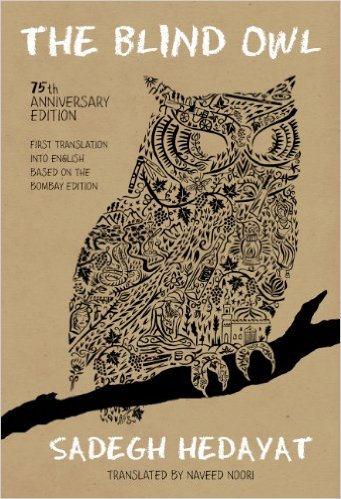
I don’t really have a favorite book because there are so many good ones, but when pressed, I say The Blind Owl. Even though I did not understand much of it upon first read, I recognized a deep connection with the narrator of the story. He was able to describe feelings I couldn’t put in words at the time. He was able to touch truth I’d thought no one else even knew about.
Let me be clear: this book is one of the most depressing books I’ve ever read. If you’re not in a good place mentally, don’t read it. Allegedly, the book is the cause of many suicides among Iranian youths. To bolster those claims, the author also committed suicide.
Upon reading, you quickly find out why. The book starts with this depressing line : “In life there are wounds that, like leprosy, silently scrape at and consume the soul, in solitude.” It begins with a tame – if somewhat morose – narrator who is quickly revealed to be mentally disturbed. Then, it tracks his descent into madness. However, the story is wound in a way that is so plain, so matter-of-fact, that the reader immediately identifies with the narrator and is trapped in his warped perspective. Rereading the story, I found myself simultaneously empathizing with and reviled by the narrator.
To say that The Blind Owl is simply horror would be to mischaracterize it. Although there is a good amount of blood and gore, and major plot points revolve around it, the real horror comes from the continuous existential crisis that pervades the narration. The protagonist is mad, but even before he snaps he spends his life wasting away with crippling depression and a sickening obsession with death. He ruminates over death meditates on it, repeating things like, “I felt I was neither completely alive or completely dead, I was but a moving corpse that could neither join the world of the living nor take part in the oblivion and peace of death.”
The Blind Owl is a masterpiece of modernism. The narrative winds expertly in circles, iterating recurring themes with slightly different meanings every time – the hunchbacked old man, the woman in black and her captivating eyes, the ghost forest with the geometric houses, and the grotesque actions of the narrator – all of these work to trap the reader into the narrator’s cyclical sickness and to make us experience his fractured reality. The story is told solely through the narrator’s point of view, even though the reader learns from the beginning that he is unreliable. A representation of the absurdity of his life, he repeats the same actions in slight variations over and over again. There is not objective truth – only the subjective depression and instability of the narrator.
If I haven’t persuaded you already, here are some more reasons to read The Blind Owl:
It’s short – only 90-160 pages depending on which edition you read.
There are multiple translations for varied reading experiences. The original book was published in Farsi. I read the translation by Naveed Noori. He believes his translation is closest to the author’s origninal intent and includes an interesting history of translation at the beginning of the book.
It’s gripping. Even though the book makes you feel like you’re slowly suffocating in black quicksand, you won’t want to stop sinking even after you finish. You’ll find yourself going back, rereading sections, tracing meanings, and wanting to read it over again. And you should read it over again because the next time you do, you’ll read with greater understanding and a heightened attunement to the hints interspersed throughout.
Finally, I want to leave this wonderful article about The Blind Owl and how it affects lives and cultures. The author of this article tells it better than I could.
(Un)happy reading!
Next week: 1984 by George Orwell


 THOUGHTS ON THELAND